Snowmobile rides are loud, cold and spread out. Your riding partner is often far behind you, the trail splits without warning, and nobody wants to pull off a glove to check a phone at 10 degrees. A Bluetooth headset in your snowmobile helmet fixes most of that: you can talk to the sled behind you, hear GPS turns and take a call without stopping. Here's what to look for in a snowmobile helmet with Bluetooth, how to keep it working in the cold, and how to set it up so you can actually hear it.
Quick answer
- To talk sled to sled, both helmets need a headset with a rider-to-rider intercom.
- Start with a DOT-certified full face or dual sport helmet. Buy one that comes with a headset, or add a headset to a helmet that has room for the speakers.
- Pick big buttons you can press in snowmobile gloves, and set everything up before you leave.
- Charge the headset indoors and keep the helmet warm between rides. Cold shortens battery run time.
What Bluetooth does in a snowmobile helmet
A helmet headset mounts on the outside of the shell, with two speakers inside over your ears and a microphone in front of your mouth. Paired with your phone, it lets you:
- Talk to another rider over the intercom
- Make and answer calls hands-free
- Hear GPS turn-by-turn directions from your trail map app
- Play music on long, open stretches
- Use your phone's voice assistant, so your gloves stay on
Not every headset has an intercom. Some connect only to a phone. If you want to talk to your riding partner, look for "rider-to-rider intercom" in the specs, and make sure both helmets have headsets that work together. Our guide to how Bluetooth intercoms work explains the difference.
A helmet with Bluetooth, or a headset for the helmet you have?
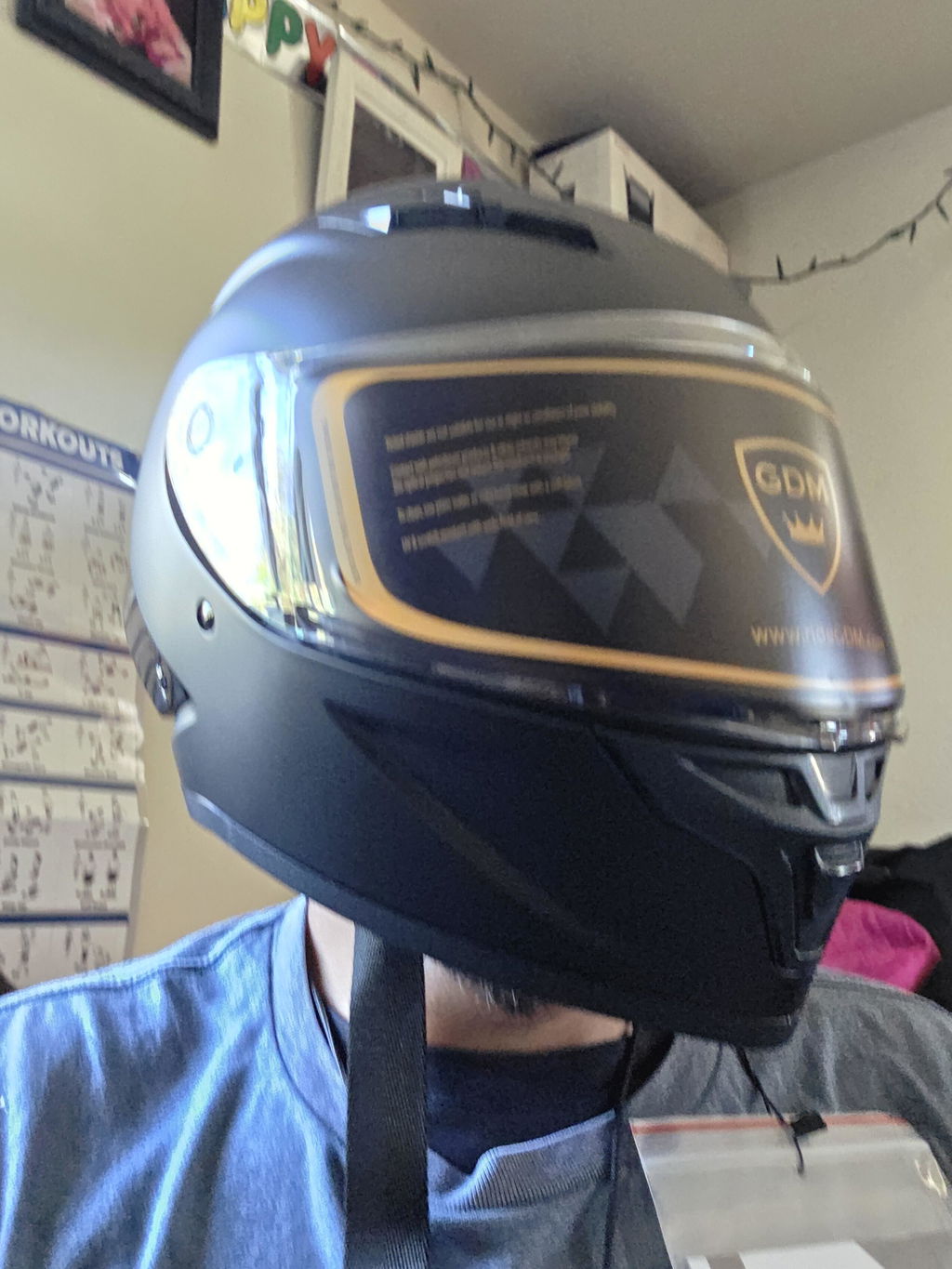
A helmet that comes with a headset is the simplest route: one box, and the speakers and microphone are chosen to fit. The GDM BEAST Bluetooth is a DOT-certified dual sport helmet that comes with the GDM HyperSonic headset, which has a rider-to-rider intercom.
Adding a headset makes sense if you already own a snowmobile helmet you like. Check the inside first: you need room at each ear for a speaker, and a smooth spot on the side of the shell for the mount. For a side-by-side look at headset options, see our Bluetooth headset guide.
What to look for
An intercom that matches your group
Most Bluetooth intercoms connect two riders directly. That suits a rider and passenger, or two sleds riding together. If you ride in bigger groups, many snowmobilers carry two-way radios as well. Whatever you use, agree on hand signals before you leave, so a dead battery doesn't leave anyone guessing. A snowmobile safety course teaches the standard signals.
Buttons you can use in snowmobile gloves
Thick gloves make small buttons hard to find. Look for a headset with a few large buttons, and practice at home with your gloves on: answer a call, skip a song and start the intercom without looking. The voice assistant helps too. You can ask for directions or call someone without touching your phone.
Weatherproofing
Snow melts on the headset, and warm breath condenses inside the helmet. Choose a headset sold as weatherproof, and dry the helmet indoors after every ride.
A helmet that's right for the cold
The headset only helps if the helmet works in the snow. You want a DOT-certified full face or dual sport helmet, a face shield that seals out the wind, and a snug fit with a thin balaclava underneath. Our guide on how to choose a snowmobile helmet covers the rest.
Keeping the battery going in the cold
Lithium-ion batteries, the kind in every Bluetooth headset and phone, give less run time in the cold. A headset that lasts all day in summer can run down sooner on a below-zero ride. A few habits help:
- Charge indoors, at room temperature, the night before. If the headset is still cold from the trailer, let it warm up before you plug it in.
- Bring the helmet inside at lunch stops and overnight instead of leaving it on the sled.
- Turn off what you don't need. Streaming music all day drains the battery faster than the occasional call or intercom chat.
- Keep your phone in an inside pocket. If the phone dies from the cold, your GPS directions go with it.
For more on staying warm yourself, see how to stay warm riding in cold weather.
Hearing the speakers through a balaclava
A balaclava keeps your face warm, but it puts fabric between the speakers and your ears, and the engine and wind add noise on top. To hear clearly:
- Wear a thin balaclava made for helmets, not a thick knit one.
- Put the speakers right over your ear canals, in the helmet's ear pockets.
- Try foam earplugs. It sounds backwards, but with the wind and engine noise turned down, many riders hear the speakers more clearly at a lower volume.
More fixes are in our guide to getting louder, clearer sound from helmet speakers.
Keep the microphone from fogging your shield
A boom microphone sits in front of your mouth, right where your breath hits the shield. Position the mic so it doesn't push a breath deflector out of place, and pull the balaclava up over your nose so warm breath goes down instead of up. See how to stop your visor fogging for the full list.
Ride safely with it
The intercom is great for "rock on the left" or "stopping at the next shelter." Long phone calls on a tight trail are not. Keep the volume low enough to hear your engine and other sleds, and save the long conversations for breaks. On frozen lakes and unfamiliar trails, your attention belongs on the ice and the trail ahead.
GDM snowmobile helmets with Bluetooth
The GDM BEAST Bluetooth Dual-Sport Adventure Motorcycle Helmet is DOT FMVSS-218 certified and built for street, trail and snow:
- GDM HyperSonic Bluetooth headset included, for calls, music, GPS directions, your phone's voice assistant and a rider-to-rider intercom with another HyperSonic
- Clear face shield, plus a drop-down tinted sun visor for snow glare
- Removable peak visor
- Removable, washable liner and cheek pads, and 5 points of ventilation
Riding with a partner? Add a GDM HyperSonic Bluetooth headset to their helmet so you can use the intercom. See all snowmobile helmets, or read our GDM BEAST review for street, trail and snow.
FAQ
Can I put Bluetooth in my snowmobile helmet?
Usually, yes. Most full face and dual sport helmets have ear pockets with room for speakers and a spot on the shell for a headset mount. Check the space around your ears before you buy.
Do Bluetooth headsets work in freezing temperatures?
Yes, but the battery runs down sooner in the cold. Charge it indoors the night before, and keep the helmet inside between rides.
How do two snowmobile riders talk to each other?
Each rider needs a headset with a rider-to-rider intercom, and the two headsets are paired once. After that, you start the intercom with a button. For bigger groups, many riders also carry two-way radios.
Is a "snow machine helmet" with Bluetooth any different?
No. "Snow machine" is what many riders in Alaska and the far north call a snowmobile. The same helmets and headsets work.
Can I hear the intercom over the engine?
Yes, if the speakers sit right over your ears. Foam earplugs help too: they cut engine and wind noise, so you can hear the intercom at a lower volume.