Riding in Cold Weather: How to Stay Warm on a Motorcycle
Share
Fall and winter can be some of the best riding of the year: empty roads, cool air and no summer crowds. But cold sneaks up on you on a motorcycle. A 45-degree day feels very different at 60 mph. Here's how to stay warm, see clearly and ride safely when the temperature drops.
Quick answer: how to stay warm on a motorcycle
- Block the wind first. Wind is what makes you cold. Wear a windproof outer layer and a full face helmet.
- Layer up: a base layer that wicks sweat, an insulating middle layer, and a windproof jacket with its liner in.
- Seal the gaps at your neck, wrists and ankles.
- Protect your hands and feet with insulated gloves and warm socks.
- Keep your shield clear with a breath deflector or anti-fog treatment.
- Ride for the conditions: cold tires, frost and wet leaves mean less grip.
Why you get cold so fast on a motorcycle: wind chill
Moving air pulls heat away from your body much faster than still air. That's wind chill, and on a motorcycle you create your own wind. Here's what exposed skin feels at riding speeds, based on the National Weather Service wind chill chart:
| Air temperature | At 25 mph | At 45 mph | At 60 mph |
|---|---|---|---|
| 40°F | 29°F | 26°F | 25°F |
| 30°F | 16°F | 12°F | 10°F |
| 20°F | 3°F | -2°F | -4°F |
In other words, a 40-degree highway ride feels like riding in the mid-20s. Any gap in your gear turns into a cold spot fast.
Start with the right helmet
Your head and face lose heat quickly, and cold wind in your eyes is a safety problem too.
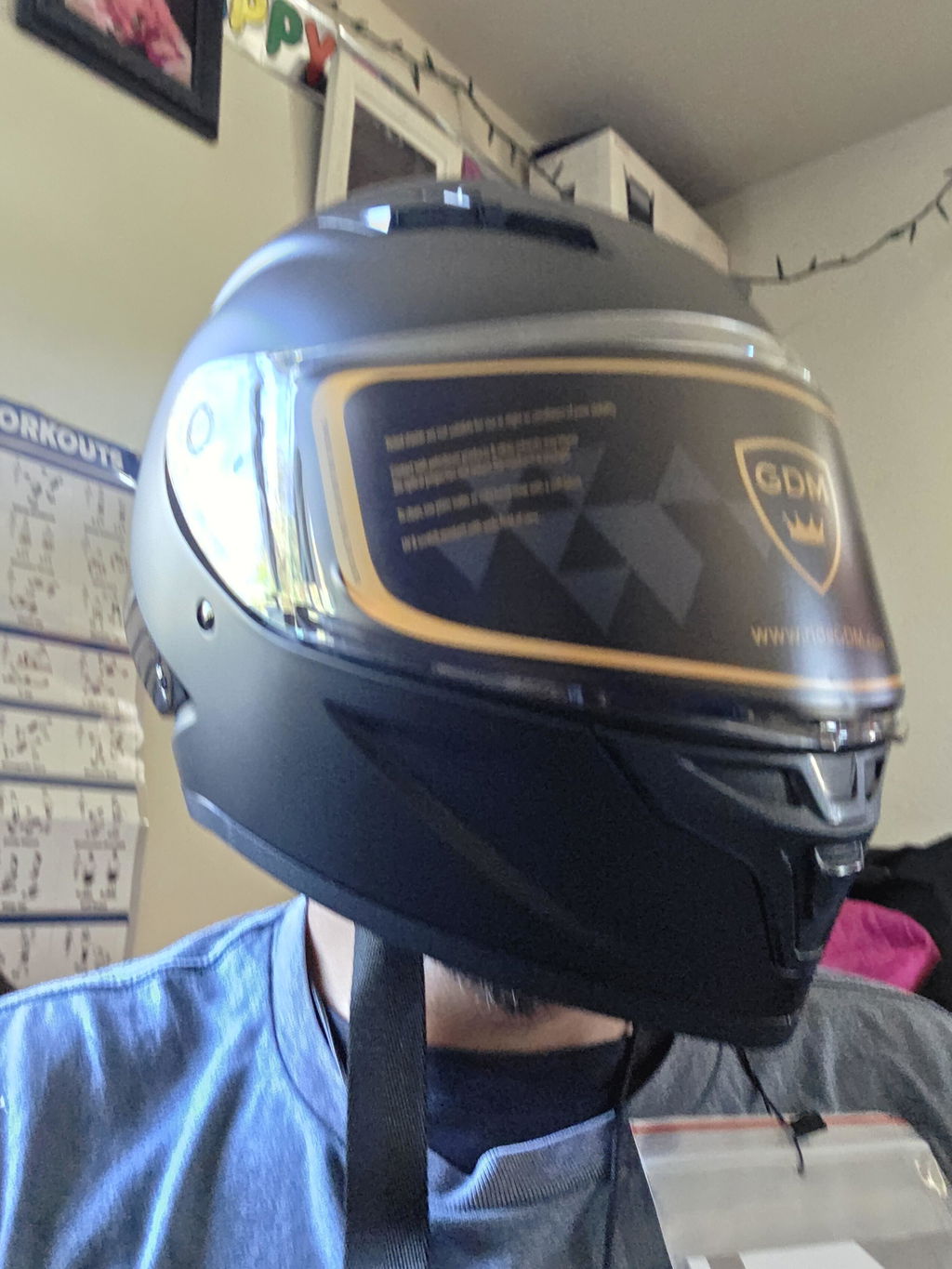
- Wear a full face helmet. A full face motorcycle helmet blocks wind from your face, chin and ears. A dual sport helmet with its shield down works well too.
- Close the vents on cold days, and open the top vent a little if your shield starts to fog.
- Add a chin curtain and breath deflector to cut drafts under the chin bar and send your breath down, away from the shield. GDM sells a chin curtain and breath deflector for select models; check the product page for fit.
- Wear a thin balaclava or neck gaiter. It seals the gap between helmet and jacket. If your helmet is already snug, try it on with the balaclava before a long ride.
- Plan for low winter sun. A tinted shield helps in the morning, but daylight fades early. A helmet with a drop-down sun visor, like the GDM BEAST, lets you keep a clear shield on and flip the tint up at dusk.
How to stop your visor fogging in the cold
Warm breath meets a cold shield and turns to fog. To fix it:
- Use a breath deflector to push your breath down.
- Crack the shield open slightly at low speeds, or use your helmet's first shield position.
- Open the chin vent to move air across the inside of the shield.
- Use an anti-fog treatment made for helmet shields.
- Keep a balaclava from covering your nose and pushing breath up.
We cover more fog-fighting tips in How to Choose a Snowmobile Helmet (and Stop Your Shield Fogging).
Layering for cold weather riding
| Layer | What it does | What to wear |
|---|---|---|
| Base layer | Moves sweat away from your skin | Synthetic or merino wool long sleeves and long underwear. Avoid cotton. |
| Mid layer | Traps warm air | Fleece, a thin down jacket, or your riding jacket's insulated liner |
| Outer layer | Blocks wind and rain, and protects you in a fall | An armored riding jacket and pants that seal at the neck, wrists and ankles |
A jacket with a removable thermal liner covers more of the year. The GDM ALPHA All Season jacket has a removable insulated liner and CE armor, and our leather jackets, the GDM OMEGA and the women's GDM Zeta, have removable thermal liners. On a mesh-shell jacket, add a windproof layer under it on cold days. Shop all motorcycle jackets.
Keep your hands and feet warm
- Gloves: switch from vented summer gloves to insulated, windproof winter gloves with a long gauntlet that tucks over your jacket cuffs.
- Heated gear: heated grips, gloves or vests make a huge difference on long winter rides.
- Feet: wool socks and insulated, waterproof boots. Toes get cold first because they sit right in the wind.
Ride safely on cold roads
- Tires take longer to warm up. Go easy on the first few miles.
- Watch for frost and ice on bridges, overpasses and shady corners, especially in the morning.
- Wet leaves are very slippery. Avoid braking or leaning hard on them.
- Be seen. Days are shorter. Wear reflective gear and a light-colored helmet if you ride at dusk.
- Take breaks to warm up, drink water and stretch. Cold muscles react slower.
Know the warning signs of getting too cold
Shivering, numb fingers that can't work the controls, slow thinking and clumsy movements mean it's time to stop and warm up. Don't push on: cold hands and a foggy mind slow your reaction time.
Cold weather riding FAQ
What temperature is too cold to ride a motorcycle?
There's no single number. It depends on your gear, the road conditions and how long you'll ride. Ice is the real limit: if roads could be icy, stay home.
Is a full face helmet warmer than an open face helmet?
Yes. A full face helmet blocks wind from your face, chin and ears, which makes a big difference in the cold.
How do I keep my motorcycle helmet from fogging in winter?
Use a breath deflector, crack the shield slightly at low speeds, open the chin vent, and use an anti-fog treatment.
Do I need a different helmet size with a balaclava?
Usually not, if you use a thin one. Try your helmet on with it. If it's uncomfortably tight, use a thinner balaclava or a neck gaiter instead.
Gear up for the season with full face motorcycle helmets and armored motorcycle jackets.