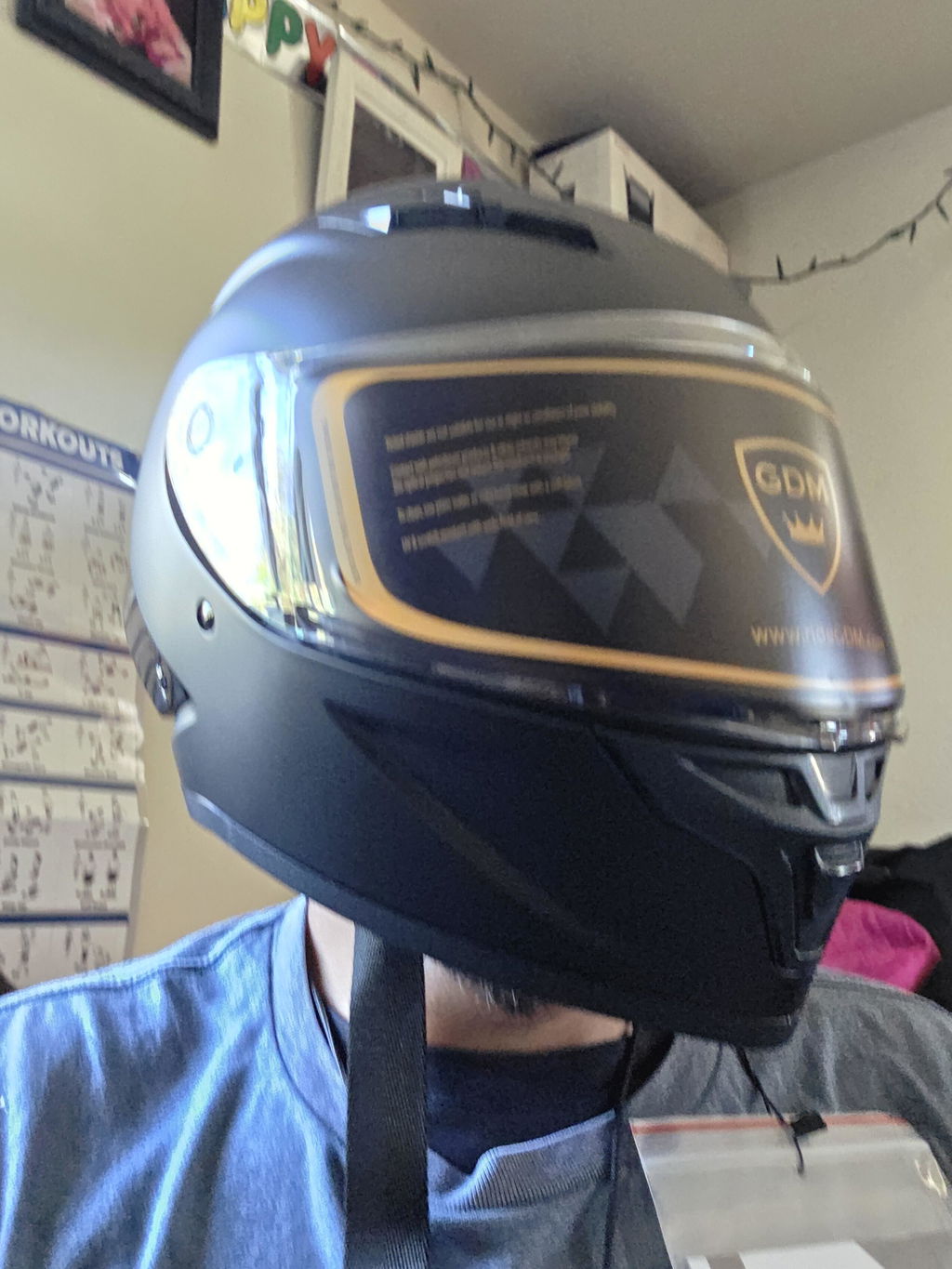
A DOT certified half helmet is far safer than no helmet or a "novelty" helmet. But it covers only the top of your head, leaving your face, jaw and much of the sides and back of your head unprotected. If you want the open, airy feel of a half helmet with more protection, a 3/4 open face or a retro-style full face helmet is a better choice. Here's how they compare.
What is a half helmet?
A half helmet covers the top of your head, from about the brow to just above the ears. There's no chin bar and little coverage at the back. Riders also call them beanies, shorties or skull caps. German-style helmets are half helmets with a flared, military-style shape.
Are half helmets DOT approved?
Some are. A half helmet that meets Federal Motor Vehicle Safety Standard No. 218 carries a DOT label and is legal for street riding. But many beanie and German-style helmets sold online are novelty helmets: decorations that aren't built to protect you, sometimes with a fake DOT sticker. NHTSA's warning signs:
- A thin liner. A compliant helmet has an inner liner of firm foam about one inch thick. Novelty helmets often have only soft padding.
- Very light weight. DOT helmets generally weigh about three pounds. Novelty helmets often weigh one pound or less.
- Flimsy chin straps and rivets.
- Spikes or decorations that stick out more than one-fifth of an inch.
- Style clues. NHTSA says German army and skullcap styles may be a sign of an unsafe helmet.
More in how to spot a fake DOT helmet.
Half vs 3/4 vs full face helmets
| Helmet | What it covers | Good to know |
|---|---|---|
| Half | Top of the head | Lightest and most open. No face, jaw or ear protection. You'll need eye protection. |
| 3/4 (open face) | Top, sides and back of the head, and the ears | Open face for airflow and visibility. Add a bubble shield, visor or goggles. |
| Full face | The whole head, face and chin | The most protection. Quieter at speed, warmer in summer. |
| Modular | Same as a full face with the chin bar down | Flips up at stops. A little heavier. |
What the research says about coverage
Helmets work: NHTSA research cited by the Insurance Institute for Highway Safety (IIHS) finds helmets are about 37% effective at preventing deaths and about 67% effective at preventing brain injuries. And more coverage helps. In a French study of 405 helmeted riders who had a head impact, riders in full face helmets were about three times less likely to have a facial injury than riders in other types of helmets. A 2020 review of the research also linked full face helmets to fewer head and neck injuries than half-coverage helmets, though the studies it pooled varied.
Why riders choose half helmets, and how to keep that feel
Riders like half helmets for the open feel, the airflow, the classic cruiser look, the light weight and how easily they go on and off. You can keep most of that with more coverage:
- A 3/4 open face helmet like the GDM RENEGADE keeps the open face and vintage style, and adds coverage for your ears and the sides and back of your head. It takes a 3-snap bubble shield.
- A retro full face helmet like the GDM REBEL gives you a classic look with a chin bar. Wear it with goggles or a 3-snap flip-up shield.
- A modular helmet like the GDM RAPTOR flips up at stops and closes for the ride.
GDM doesn't sell half helmets. Browse our open face helmets and retro and vintage helmets, all DOT certified, or compare styles in open face vs full face helmets.
Are half helmets legal?
Where a state requires helmets, the law generally calls for a DOT-compliant helmet. A DOT certified half helmet meets that; a novelty helmet doesn't. Who has to wear a helmet varies a lot from state to state. See our motorcycle helmet laws by state.
FAQ
Is a 3/4 helmet safer than a half helmet?
A 3/4 helmet covers more of your head, including the sides, back and ears, so it protects a larger area. Neither protects your face and chin like a full face helmet.
Do I need eye protection with a half helmet?
Yes. Without a shield, wear riding glasses or goggles to keep wind, bugs and debris out of your eyes.
Are beanie helmets DOT approved?
Some are, but many beanies are sold as novelty helmets and aren't. Check for a real DOT label, a firm foam liner about an inch thick and a weight of around three pounds.
What's the safest type of helmet?
A certified full face helmet that fits you properly. See what is the safest motorcycle helmet.
Sources
- NHTSA: How to Identify Unsafe Motorcycle Helmets
- IIHS: Fatality Facts 2024: Motorcycles and ATVs
- Does a full-face helmet effectively protect against facial injuries? (PubMed Central)
- Are full-face helmets the most effective in preventing head and neck injury in motorcycle accidents? A meta-analysis (PubMed Central, 2020)