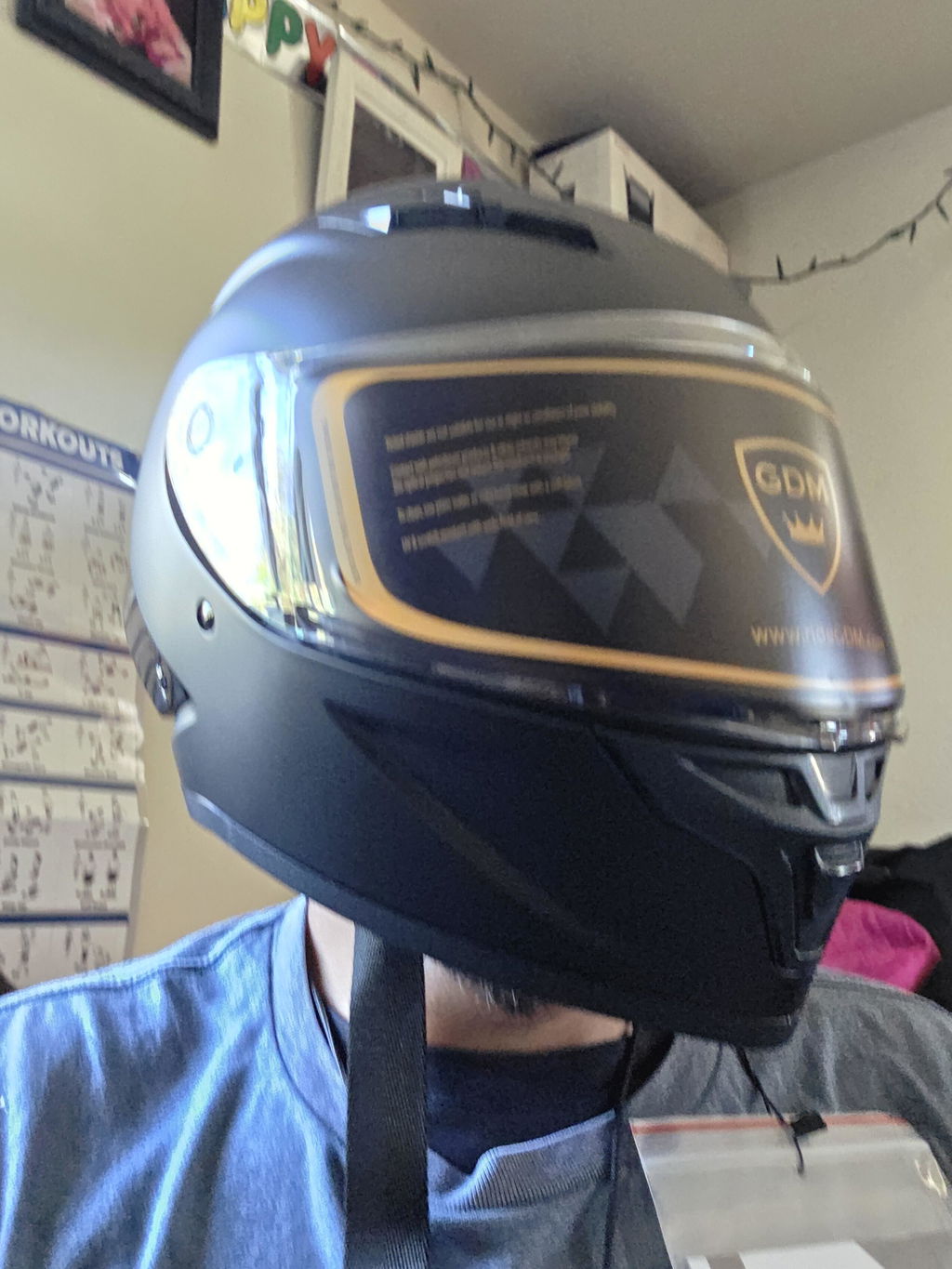
Most full face motorcycle helmets weigh about 3 to 4 pounds (roughly 1,400 to 1,800 grams). The lightest street helmets use carbon fiber shells and can come in under 3 pounds. But a lighter helmet isn't automatically safer, or even more comfortable. Here's what affects helmet weight, what each shell material offers, and how to choose a helmet that feels light on a long ride.
How much does a motorcycle helmet weigh?
| Helmet | Typical weight |
|---|---|
| Full face, thermoplastic or fiberglass shell | About 3 to 4 lb (1,400 to 1,800 g) |
| Full face, carbon fiber shell | About 2.6 to 3.2 lb (1,200 to 1,450 g) for many models |
| Modular (flip-up) | Usually heavier than a similar full face, because of the hinge and chin bar mechanism |
| Open face (3/4) | Usually lighter than a full face, because there's no chin bar |
| "Novelty" helmet (not DOT) | Often 1 lb or less: a warning sign, not a feature |
NHTSA notes that helmets meeting the federal DOT standard generally weigh about three pounds, while unsafe novelty helmets often weigh one pound or less. Weight also changes with size: larger sizes often use a bigger shell and weigh a little more.
Shell materials: polycarbonate vs fiberglass vs carbon fiber
Thermoplastic (polycarbonate, ABS and poly-alloy)
Injection-molded plastic shells. They're tough and affordable, which is why most helmets under $200 use them. For the same protection, they're usually a little heavier than composite shells.
Fiberglass and composite
Layers of fiberglass, sometimes mixed with other fibers, set in resin. They're lighter than thermoplastic for the same strength but take more work to make, so they cost more.
Carbon fiber
The lightest common shell material. One helmet maker estimates carbon shells are about 15% to 25% lighter than many fiberglass shells. Carbon helmets are usually the most expensive.
The part that does the work: the EPS liner
Whatever the shell, the expanded polystyrene (EPS) foam liner inside is what crushes to absorb impact energy. NHTSA describes the liner of a compliant helmet as firm foam about one inch thick. A lighter shell doesn't change that basic way a helmet protects you.
Does a lighter helmet reduce neck fatigue?
On a long ride, weight adds up. But fit, balance and aerodynamics matter just as much:
- Fit: a loose helmet moves around and makes your neck work harder. A snug helmet feels lighter.
- Aerodynamics: a shell that cuts cleanly through the air, often with a rear spoiler, lifts and buffets less at highway speed. See aerodynamic helmets for highway riding.
- Balance: weight centered over your head feels lighter than the same weight sitting forward.
- Wind: on a bike with no windscreen, wind pressure on your helmet often tires your neck more than the helmet's weight.
Is a lighter helmet safer?
Not by itself. Every DOT certified helmet has to pass the same federal tests, whether it weighs three pounds or four. What makes a helmet safe is certification, coverage and fit. The one weight that should worry you is a very light one: a "helmet" that weighs a pound or less is probably a novelty helmet. Here's how to spot a fake DOT helmet, and what really makes a helmet safe in what is the safest motorcycle helmet.
How to choose a helmet that feels light
- Get the right size. Measure your head and use the size chart.
- Choose an aerodynamic full face for highway riding.
- For short, slower rides in town, an open face helmet has less shell and a lighter feel. Wear eye protection.
- Choose a modular only if you'll use the flip-up, because the mechanism adds weight.
- Wear it around the house for 15 to 20 minutes before you ride. Pressure points show up long before weight does.
GDM helmets
GDM's full face helmets, including the Ghost, VENOM and DEMON, use a lightweight composite poly-alloy shell over an EPS liner. The retro REBEL and the 3/4 RENEGADE use an injection-molded ABS shell. GDM doesn't make carbon fiber helmets. Every GDM motorcycle helmet is certified to DOT FMVSS No. 218. Want the weight of a specific model and size? Ask our team.
FAQ
How much does a full face motorcycle helmet weigh?
Most weigh about 3 to 4 pounds (1,400 to 1,800 grams), depending on the shell material and size.
Is a carbon fiber helmet worth it?
If you ride long distances and want the lightest helmet, carbon can be worth the extra cost. The material alone doesn't mean a helmet meets a higher safety standard, so check the certification.
Are lightweight helmets less safe?
Not if they're certified. But be wary of any "helmet" that weighs a pound or less; that's a sign of a novelty helmet.
Why are modular helmets heavier?
The flip-up chin bar needs a hinge and a locking mechanism, and that hardware adds weight.