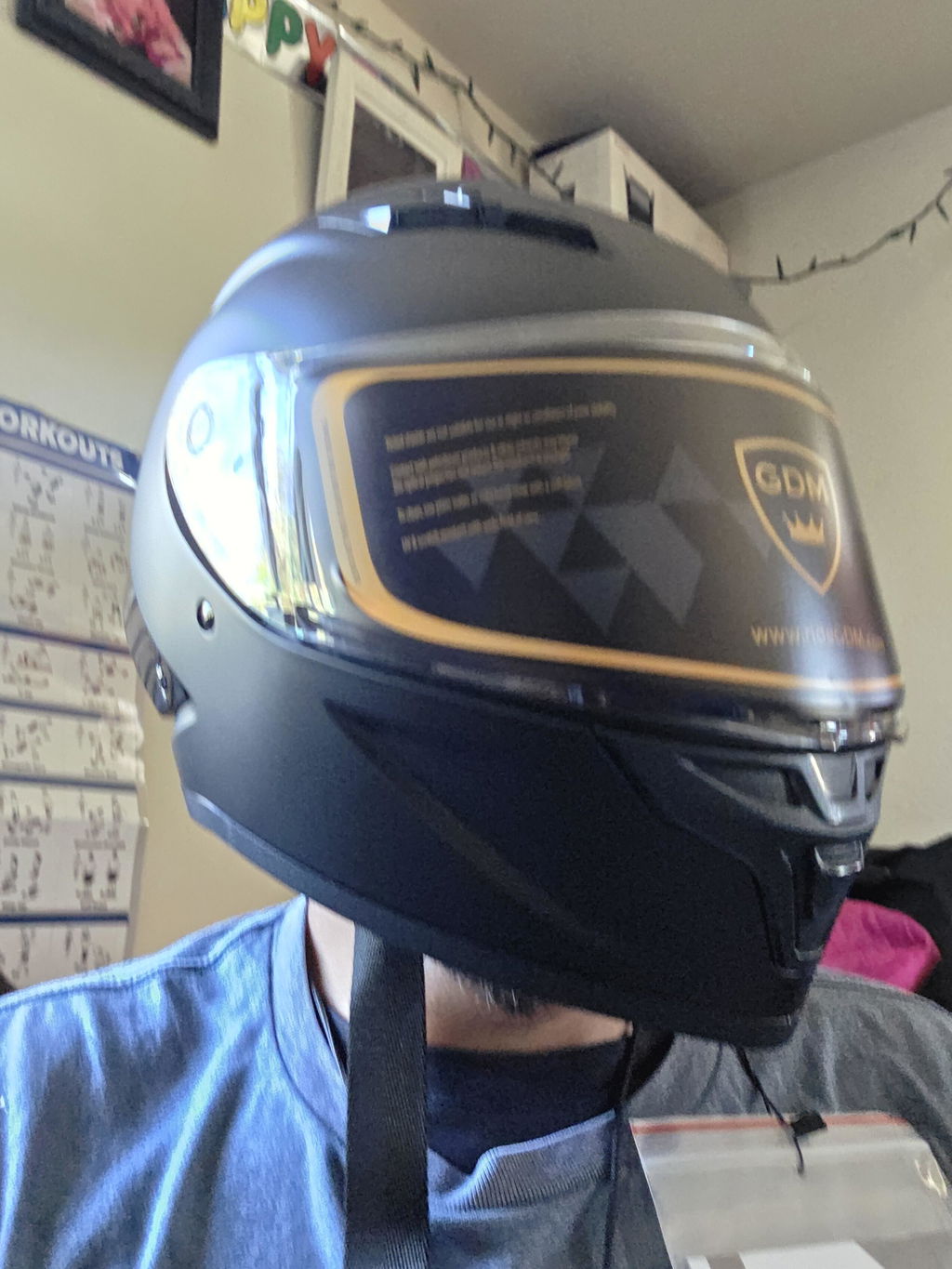
How to Break In a New Motorcycle Helmet (Tight Cheek Pads and Pressure Points)
Share
A new motorcycle helmet often feels too tight: the cheek pads squeeze your face, and it takes some effort to pull on. Usually that's exactly right. The padding is built to break in and mold to your head. But some tightness never goes away, and riding through it means headaches on every ride. Here's how to break in a new helmet, how long it takes, and how to tell normal snugness from a helmet that doesn't fit.
What "breaking in" actually means
A helmet has two layers inside. The comfort padding, the cheek pads and the fabric liner, is soft foam that compresses and shapes itself to your face and head over the first rides. Under it is the EPS impact liner, the hard foam that protects you in a crash. The EPS doesn't break in, and it shouldn't.
That's the key to the whole question: the cheek pads will loosen, but a spot where the shell itself presses on your head will not.
Normal snugness or the wrong size?
| Normal for a new helmet (will break in) | Wrong size or shape (won't break in) |
|---|---|
| Cheek pads press firmly, cheeks push up a little | A sharp pressure point on the forehead |
| Hard to pull on, easy once it's on | A headache within 20 to 30 minutes |
| Even, firm pressure all around | Pressure on the top of the head, gaps at the sides |
| Feels tight but you can talk and chew | Red marks that last after you take it off |
| Snug feeling eases after a few hours of wear | Numbness or tingling anywhere on your head |
A sharp point of pressure on the forehead or sides usually means the helmet's shape doesn't match your head, not that it's too small. Learn more in how to choose a helmet based on your head shape.
How long does it take?
Most cheek pads and liners settle in over the first 15 to 20 hours of wear. You'll notice the biggest change in the first few rides. After that, the fit stays fairly steady until the padding starts to wear out.
How to break in a new helmet
- Wear it at home first. Put it on for 20 to 30 minutes while you watch TV or read. Wearing it indoors lets you check for pressure points while the helmet is still like new.
- Build up the time. Wear it for longer each session over a few days. An hour at a time is a good goal before your first long ride.
- Put it on the right way. Spread the chin straps wide and pull the helmet on from the back to the front. Tight cheek pads make it feel worse than it is if you force it straight down.
- Take short rides next. Start with 30 to 60 minute rides close to home, so you can stop if it starts to hurt.
- Check the fit again after a week. Once the pads have settled, do the shake test: the helmet shouldn't slide when you move your head. Our helmet fit guide walks you through it.
What not to do
- Don't heat the helmet with a hair dryer, heat gun or a hot car to speed things up. Heat can weaken the EPS liner and the glue that holds the padding.
- Don't cut or carve the EPS liner to make room. It changes how the helmet protects you in a crash.
- Don't pull foam out of the cheek pads. It ruins their shape, and they'll feel loose and lumpy.
- Don't buy a size up because the helmet feels tight in the store. Once the pads break in, the bigger helmet will be loose.
Where it hurts, and what to do
Cheeks
Tight cheeks are the most common complaint, and the one most likely to fix itself. Give the pads a few hours of wear. If your cheeks are still sore after a week of riding, the pads may be too thick for your face.
Forehead
A forehead pressure point is the classic sign of a round-oval mismatch: a long, oval head in a rounder helmet. It won't break in. Try a different size or model.
Top of the head
Pressure on the crown with gaps at the sides usually means the helmet is too small or too round. Check your size against our helmet size chart.
Ears
Ears folded under the padding hurt fast. Pull the helmet on from the back and check that your ears sit flat in the ear pockets. Speakers from a Bluetooth headset can also press on your ears; move them so they sit over the ear pockets, not on top of your ears.
Temples, with glasses
If you wear glasses, the frames can press into your temples. Thin, straight arms help. See helmets for riders who wear glasses.
When the helmet won't break in
If a pressure point is still there after a few hours of total wear, or a headache keeps coming back, the helmet isn't the right fit. Try it on indoors only until you're sure, so you can still exchange it. Riding in a helmet that hurts isn't just uncomfortable: you'll be distracted, and you'll be tempted to leave it at home.
Some head shapes are hard to fit in any standard helmet. If you're between sizes or have a larger head, see motorcycle helmets for big heads or the women's helmet fit and sizing guide.
When the helmet gets too loose
Padding keeps compressing over the years. If the helmet now slides when you shake your head, or you can slide a finger in at the cheeks, the cheek pads are worn out. Replacement GDM helmet cheek pads are available for the BEAST, VENOM, DEMON, Ghost and REBEL in sizes S to 2XL. If the helmet is old or has been dropped, read how long a helmet lasts before replacing just the pads.
FAQ
Should a new motorcycle helmet feel tight?
Yes, snug. The cheek pads should press firmly and your cheeks may push up slightly. It shouldn't hurt, and there should be no sharp pressure points.
How long does it take to break in a motorcycle helmet?
Most helmets settle in over the first 15 to 20 hours of wear, with the biggest change in the first few rides.
Will a helmet that gives me a headache break in?
Usually not. A headache within 20 to 30 minutes almost always means a pressure point from the shell or EPS liner, and that part doesn't change. Try another size or shape.
Do the cheek pads loosen up?
Yes. Cheek pads loosen the most of any part of the helmet as the foam compresses, which is why a new helmet should feel snug in the cheeks.
Can I wash the padding while I'm breaking it in?
Yes. Removable liners and cheek pads can be hand washed. Let them dry fully before you put them back. See how to clean a motorcycle helmet.