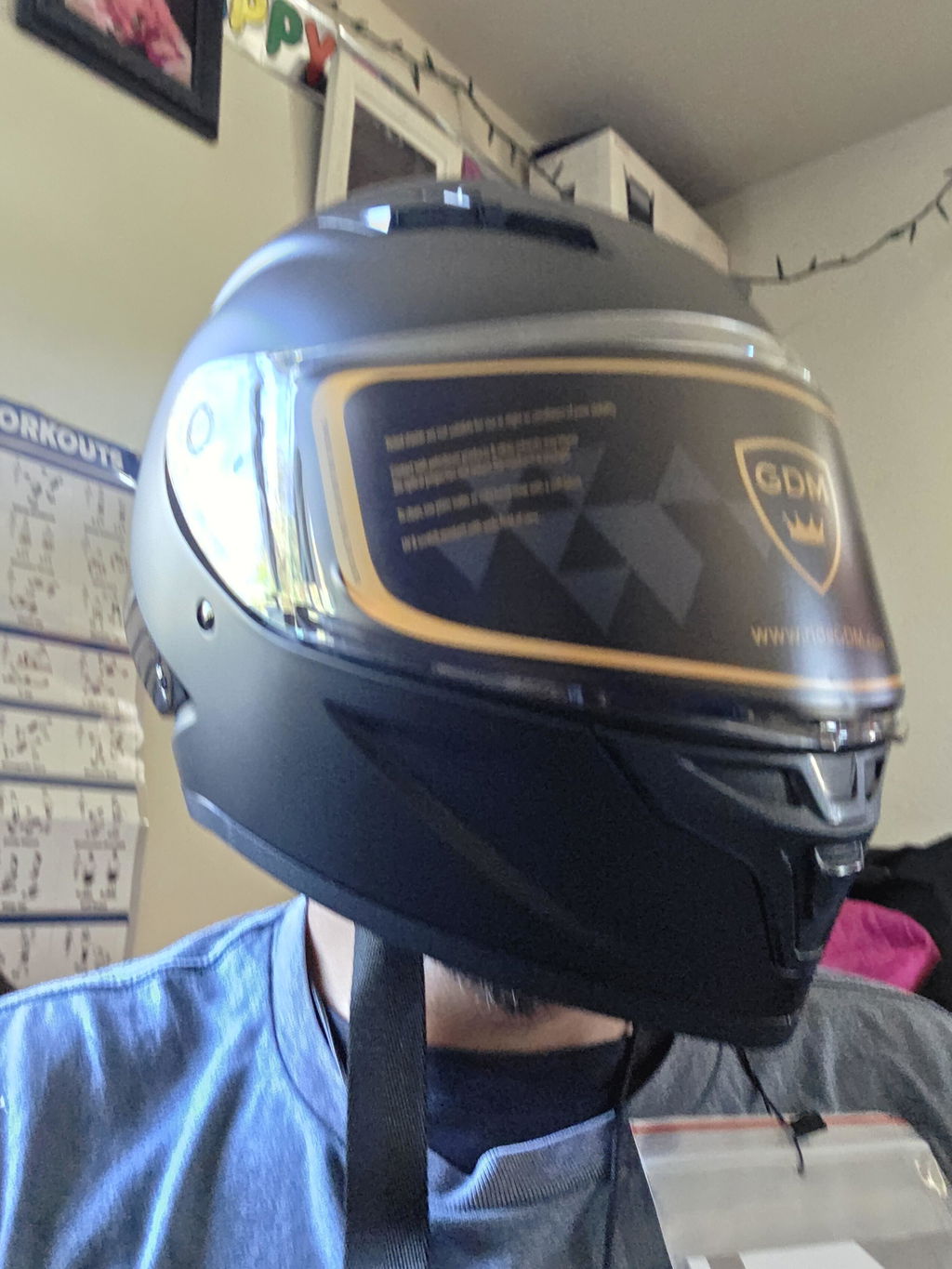
Motorcycle Helmets for Women: Fit and Sizing Guide
Share
Shopping for women's motorcycle helmets? Here's the short answer: most motorcycle helmets are unisex, and the "right" helmet is the one that fits your head. A helmet that fits well protects better, stays quieter and is far more comfortable on a long ride. This guide covers how to measure, size and choose a helmet, including what to do with long hair.
Do women need a women's-specific helmet?
Not usually. Every DOT certified helmet meets the same U.S. safety standard, whatever it's marketed as. Women's lines mostly differ in graphics and sometimes in smaller sizes. What really matters is that the helmet matches your head size and shape. If a unisex helmet fits you well, it's the right helmet.
Step 1: Measure your head
Wrap a soft tape measure around your head about an inch above your eyebrows, just above your ears and around the widest part at the back. Take the largest of a few measurements and compare it to our helmet size chart. Most GDM helmets come in unisex sizes S to 2XL. Our guide on how to measure your head walks through it step by step.
Step 2: Know your head shape
Heads range from round to long oval. A helmet that's the right size but the wrong shape causes pressure points on your forehead or sides. Learn more in how to choose the right helmet based on your head shape.
Step 3: Plan for your hair
- Wear your hair low. A low ponytail or braid at the nape of your neck fits under most helmets. A high ponytail or bun on top or at the back can push the helmet forward or up.
- Try the helmet on with your riding hairstyle. Thick or long hair can change how a helmet fits.
- Keep the strap clear. Make sure no hair is caught under the chin strap or the buckle.
- Consider a thin balaclava or liner to reduce tangles and keep the helmet liner clean.
Step 4: Check the fit
- The helmet feels snug all around, with the cheek pads pressing gently on your cheeks.
- There are no pressure points, especially on your forehead.
- With the strap fastened, the helmet doesn't roll forward or backward when you push it.
- Your eyes sit in the middle of the eye port.
A new helmet breaks in a little, so don't size up because it feels tight at first. See our helmet fit guide for more.
Choosing a style
- Full face: the most protection, quiet at highway speed. Women's full face motorcycle helmets are simply full face helmets in a size and color that suit you; the DK-140 in gloss white and the Ghost in matte black are two options. Shop all full face helmets.
- Modular: flip up the chin bar at stops, easier with glasses, like the GDM RAPTOR with Bluetooth included.
- Open face (3/4): lighter feel and lots of airflow for town riding, like the vintage GDM RENEGADE. Wear eye protection.
Features worth having
- Bluetooth for group rides and GPS directions. See Bluetooth motorcycle helmets.
- Extra shields, clear for night and tinted for sun.
- A removable, washable liner to keep the helmet fresh.
- DOT certification, always. See DOT approved motorcycle helmets.
FAQ
What size motorcycle helmet do women usually wear?
There's no typical size. Measure your head and use the size chart rather than guessing from clothing size.
Are women's motorcycle helmets safer?
No. Every DOT certified helmet meets the same standard. A helmet that fits you well is the safest choice.
Can I wear a helmet with a ponytail?
Yes. Wear it low at the nape of your neck so it doesn't push the helmet out of position.
What if I'm between sizes?
Try both if you can, and choose the one that's snug without pressure points. If the size isn't right, domestic exchanges are free, or contact us for help.