How to Reduce Motorcycle Helmet Wind Noise: 8 Fixes That Work
Share
Helmet wind noise isn't just annoying. On long rides it wears you out, and at highway speed it can be loud enough to damage your hearing over time. Many riders go looking for the quietest motorcycle helmet, but how quiet a helmet sounds depends as much on fit, your bike and your windscreen as on the helmet itself. Start with these 8 fixes.
Where helmet noise comes from
Most noise isn't the wind hitting the shell. It's turbulent air rushing into gaps: under the chin bar, around the neck opening, past the edges of the shield and through open vents. Buffeting off a windscreen adds more. Close those gaps and smooth the airflow, and the helmet gets quieter.
1. Make sure the helmet fits
A loose helmet lets air rush around your ears and head. A good fit is snug all around, with the cheek pads pressing gently on your cheeks. If your helmet has packed out over time, new cheek pads or a smaller size can make a big difference. Check our helmet size chart and fit guide.
2. Wear earplugs
No helmet is silent at highway speed, so earplugs are the single most effective fix. Foam or reusable riding earplugs cut wind roar while still letting you hear traffic, horns and your Bluetooth headset.
3. Add a chin curtain
A chin curtain closes the gap under the chin bar, one of the biggest sources of noise and draft. Many full face helmets have one, and you can often add one if yours doesn't. Browse helmet parts and check fit for your model.
4. Use a breath deflector
A breath deflector also blocks air coming up from under the chin, and it helps stop your shield fogging in cold weather.
5. Check the shield seal
A shield that doesn't close fully, or a worn seal around the eye port, lets air whistle in. Make sure the shield clicks shut and replace it if it's warped or scratched. See our shield replacement guide.
6. Close the vents at speed
Open vents are great in summer traffic but add noise on the highway. Close them when you speed up, and open them again when you need airflow.
7. Seal the neck opening
A neck gaiter, scarf or balaclava, or a jacket with a high collar, cuts the air rushing up into the helmet from below.
8. Adjust your windscreen
A windscreen that sends turbulent air right at your helmet can be louder than no windscreen at all. Try raising it so clean air flows over your helmet, or lowering it so your helmet sits in smooth air instead of the turbulent edge.
Which helmet type is quietest?
A full face helmet is usually the quietest type, because its one-piece shell has no gaps at the chin and the shield seals the eye port. Modular helmets add a seam at the chin bar, dual sport helmets have a peak that catches wind, and open face helmets let the wind straight in. Learn what makes a helmet slip through the air in aerodynamic helmets for highway riding.
GDM full face helmets
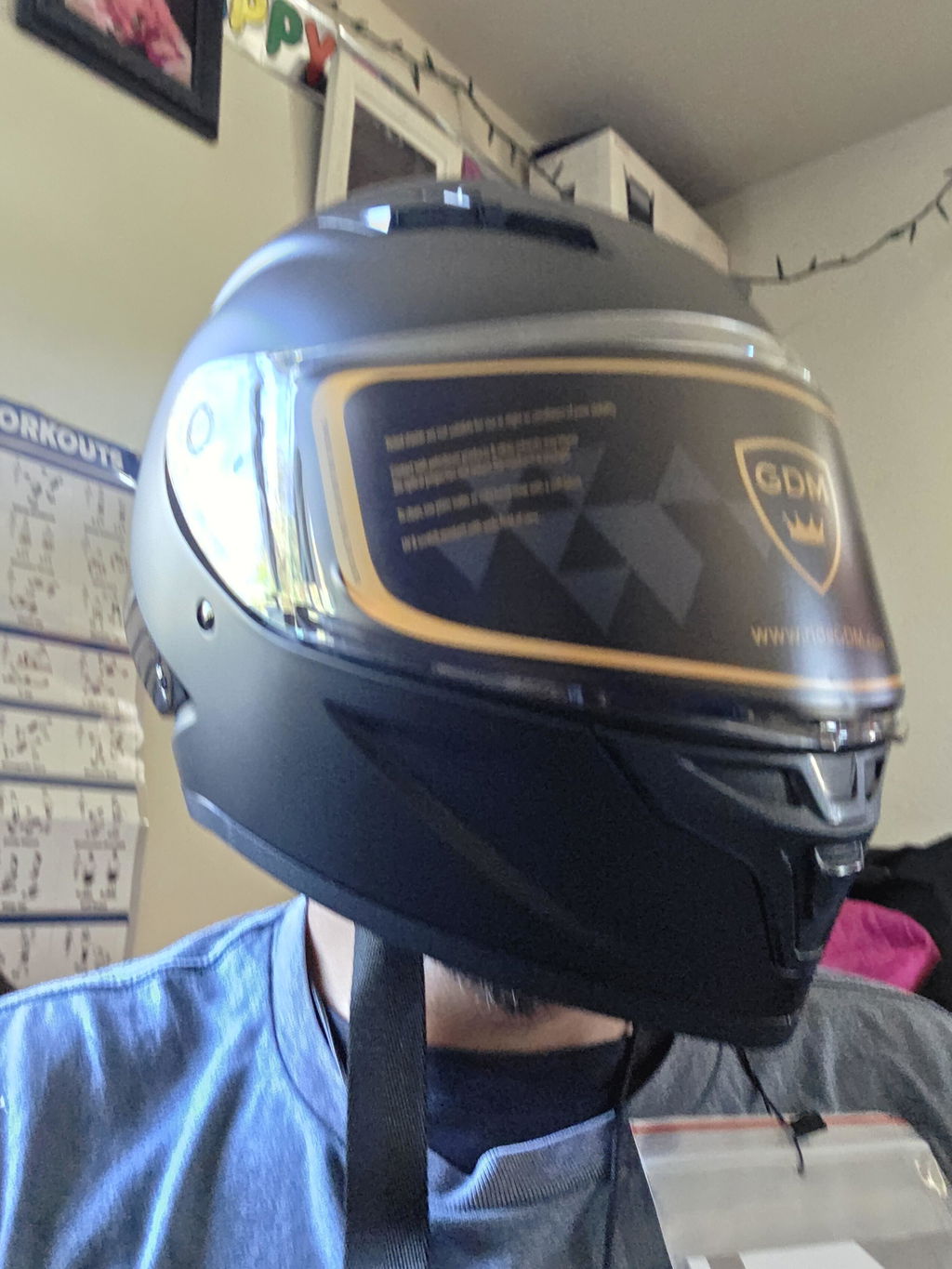
GDM full face helmets like the DEMON, Ghost and VENOM have aerodynamic composite shells, flush-fit face shields and 5-point ventilation you can close at speed. Shop all full face motorcycle helmets.
FAQ
What is the quietest type of motorcycle helmet?
A well-fitting full face helmet, worn with earplugs. Fit and your windscreen matter as much as the helmet itself.
Why is my helmet so loud?
Usually air entering under the chin bar or around the neck, a loose fit, open vents, or turbulence off your windscreen.
Can I still hear my Bluetooth headset with earplugs in?
Yes. Earplugs cut wind roar more than they cut speaker sound, so many riders find their headset easier to understand with earplugs in.
Does a chin curtain really help?
Yes. It blocks one of the biggest sources of noise and drafts, the gap under the chin bar.